How Should a Leather Jacket Fit? The Complete Fit Guide

A leather jacket should fit snug but not tight — close enough to follow your shape, loose enough to let you move freely. Fit is the single biggest factor in how good a leather jacket looks and how often you will actually wear it. And the golden rule of leather jacket fit is simple: measure, don’t guess. Before you order anything, grab a tape measure and work through our size guide, noting your chest, shoulder, sleeve and waist numbers.
Your numbers will tell you instantly whether you are a clean standard size or somewhere in between. If your proportions never quite match off-the-rack patterns — broad shoulders with a slim waist, long arms, a tall or short frame — Made to Measure cuts every panel to your exact measurements, so the jacket passes every fit test by construction. Either way, run every jacket you try through the five-point fit test below.

Key Takeaways
- A leather jacket should fit snug but not tight: shoulder seams at the edge of your shoulders, a chest you can slip a flat hand into, sleeves ending at the wrist bone.
- Measure, don’t guess: chest, shoulders, sleeve, and length — taken over the layer you will actually wear — decide the size. Our size guide turns those numbers into a size.
- Leather molds to your body but never grows a full size. A slightly snug jacket becomes perfect; a genuinely tight one never does.
- Between sizes, or layering heavy knits all winter? Size up. Wearing it over tees and light shirts? Buy your measured size.
The Five-Point Fit Test
Stand in front of a mirror in the jacket, zipped up, and check these five points in order. If a jacket passes all five, it fits — whatever the size tag says.
1. Shoulders
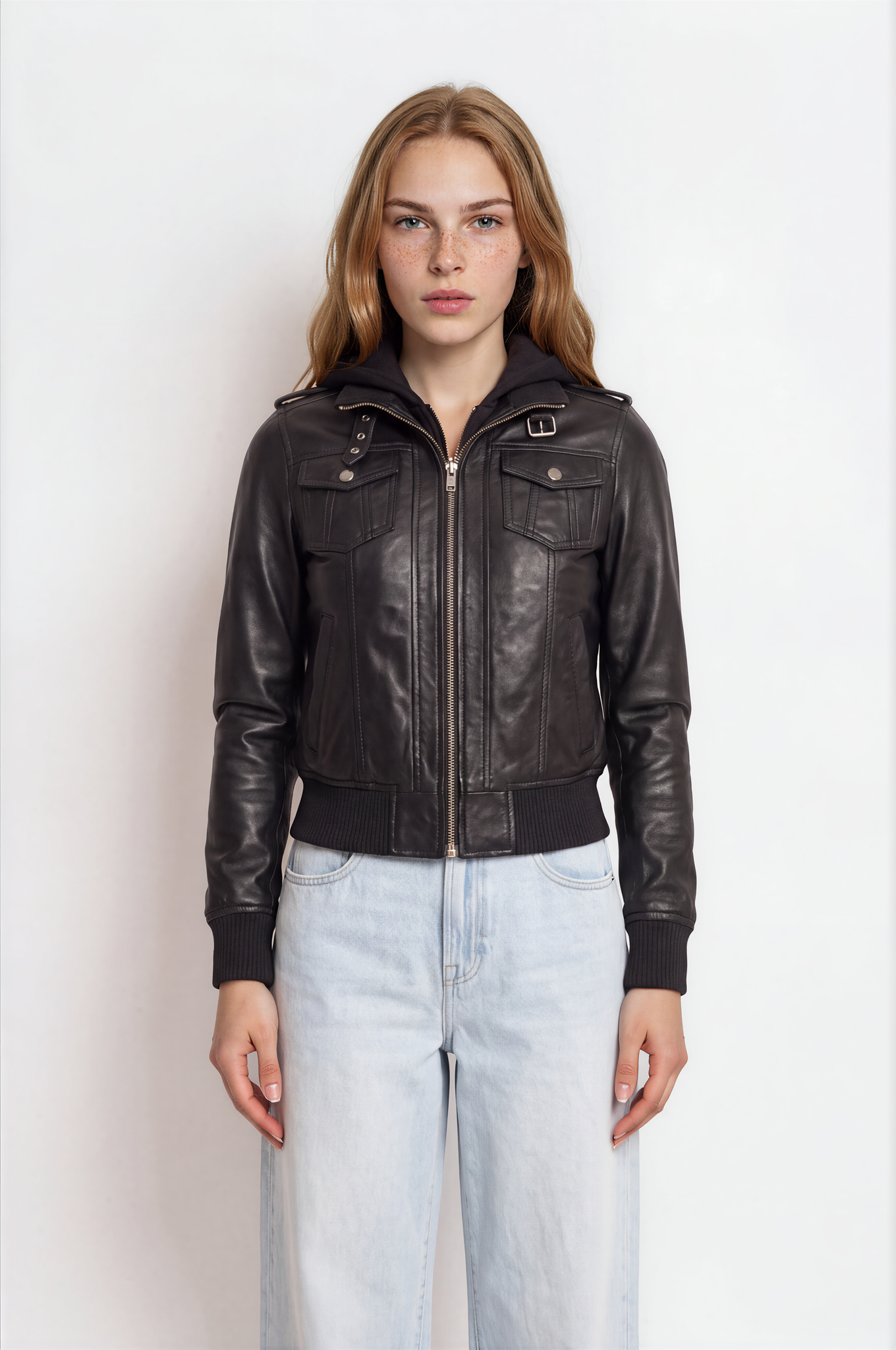
The shoulder seams should sit right at the edge of your natural shoulders — not drooping halfway down your upper arms, and not pinched inside the shoulder line. Shoulders are the hardest part of a jacket to alter, so this is your deal-breaker: seams sitting too wide make the whole jacket look boxy and borrowed, while seams pulling inward will strain every time you reach forward.
2. Chest
Zip or button the jacket fully closed. You should be able to slide a flat hand between your chest and the leather without the front pulling or the zipper straining. If the lapels gape or the zip fights you, go up a size. Leather does ease and mold with wear, but it will never stretch a full size — buying too small in the chest is the most common fit mistake we see.
3. Sleeves
With your arms hanging relaxed at your sides, the sleeves should end right at your wrist bone, just covering the cuffs of the shirt underneath. New leather sleeves often feel a touch long at first because the leather sits stiff; bend your arms slightly to check — the cuffs should still cover your wrists. Sleeves ending halfway up your forearm will look short forever, and sleeves swallowing your hands signal the size is wrong.
4. Length
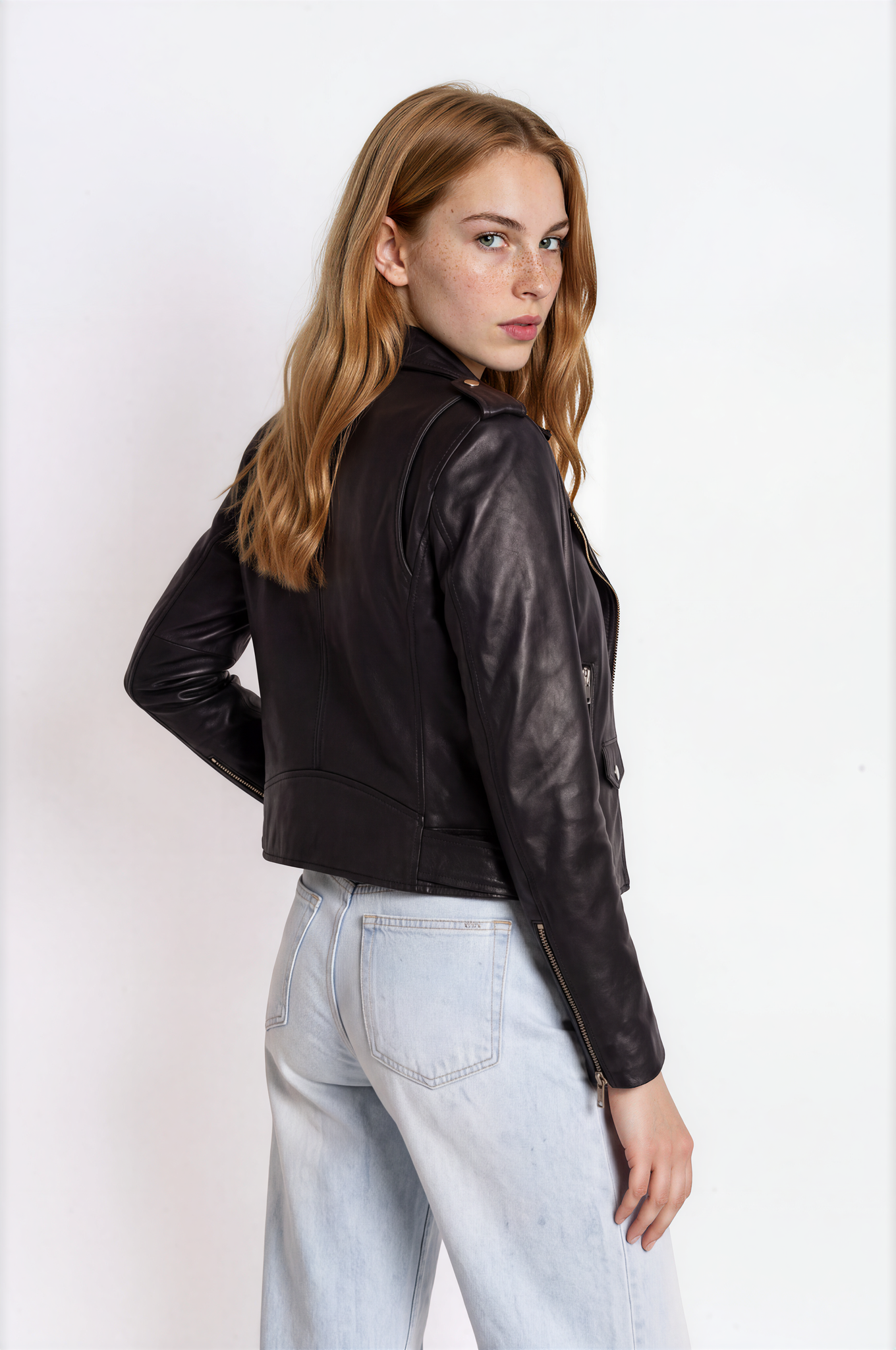
A biker or bomber jacket should end at your waistband; an aviator or shearling style can sit a little lower, around the hip. As a rule, a jacket that covers your seat will visually shorten your legs and bunch up when you sit — unless it is a long coat designed that way. Check the back in the mirror, not just the front.
5. Movement
Raise your arms overhead, hug yourself, and mime holding a steering wheel. The jacket should move with you: snug across the back, with no sharp pinching under the arms or across the shoulder blades. Some mild resistance is completely normal in new leather — it softens and breaks in within weeks — but sharp pulling or a zipper that strains when you move means the size is wrong, not the leather.
How to Take Your Measurements
The fit test above judges a jacket you are already wearing. These four measurements choose the right size before you order — take them over the thickest layer you realistically plan to wear underneath, and have someone help you if you can; self-measuring a back is how numbers go wrong.
Shoulders. Measure across your back from the bony point of one shoulder to the bony point of the other, in a straight line. This is the measurement to trust above all others: shoulders are built into the pattern and cannot be tailored later.
Chest. Wrap the tape around the fullest part of your chest, under the armpits, keeping it level all the way around. One caution: most size charts list the garment’s chest measurement, not the body’s. If your chest is 42 inches, a jacket measuring 42 inches will fit skin-tight — you want a couple of inches of ease between your body and the garment, more if you layer.
Sleeve. Start the tape at the center of the back of your neck, run it across your shoulder and down the outside of your arm to your wrist bone, with your arm slightly bent. A straight-arm measurement reads short.
Length. Measure from the base of your neck down your back to where you want the jacket to end — for most styles, somewhere between the top of your belt and the bottom of your hip pockets. If you are tall, watch this number most: standard sizes are cut for an average torso.
Note the four numbers down, then compare them against the size guide for the style you are buying — a slim racer and a relaxed bomber in the same letter size are not built around the same body.
Should a Leather Jacket Fit Tight or Loose?
Neither, really — it should fit close. Leather behaves differently from wool or cotton: it doesn’t drape, it molds. A jacket that feels slightly snug on day one will relax and conform to your body over the first few weeks of wear, becoming a perfect fit. If it feels comfortably roomy the moment you try it on, it will almost certainly be too loose after break-in.
On the other hand, a genuinely tight jacket — zipper straining, seams pulling white at the stress points, restricted reach — will not stretch enough to save it, and it will crease in all the wrong places. Aim for that sweet spot: snug, with full range of motion. When in doubt between a snug fit and a tight fit, the snug one is the keeper.
Will a Leather Jacket Stretch?
A little — in specific places, and never a full size. Full-grain leather softens with body heat and movement over the first few weeks: the elbows crease in, the shoulders round to your slope, and the chest gives a small, gradual amount where it needs to. What it will not do is grow into a different size. A jacket that is snug on day one becomes the best-fitting thing you own; a jacket that is restricting — zipper straining, seams pulling, reach limited — will still be restricting six months later.
That is why the buying rule is: fit for day one, with your real layer underneath, and let the break-in do the fine-tuning. Our guide to how to break in a leather jacket covers how that molding process works and how to help it along.
Men vs Women: What Changes
The five-point test applies to everyone, but the patterns differ. Women’s leather jackets are typically cut with a narrower shoulder, a more defined waist and a slightly shorter body, while men’s cuts run straighter through the torso with more room across the shoulders and chest.
Women with broader shoulders often need to choose their size by the shoulder measurement and accept a slightly roomier waist — or go made-to-measure. Men with athletic builds frequently need to size up for the chest and then check that the sleeves aren’t too long. Either way, compare your actual numbers against the size guide, and if you’re shopping for her, our women’s leather jacket buying guide walks through women’s-specific cuts, lengths and sizing quirks in detail.
Layering: When to Size Up
Buy for what you will actually wear underneath the jacket. If it’s a three-season piece worn over t-shirts and light shirts, buy your measured size — full stop. If you plan to layer heavy sweaters, thick knits or hoodies underneath all winter, size up one.
The definitive test: try the jacket on over your thickest intended layer. If the zip closes without strain and you can still raise your arms and hug yourself, the size is right. Sizing up “just in case” for light layers is a mistake — the jacket will look oversized nine months of the year and never mold properly to your frame.
Size Up, Stay True, or Size Down? The Quick Decision
Size up if: you are between sizes; you will wear flannels, sweaters, or hoodies underneath; you have a broad chest or larger arms; or you prefer a relaxed silhouette over a tailored one.
Stay true to size if: your measurements land cleanly inside the size range, not at its edges; you will wear the jacket over tees and light shirts; and you want the close, sharp fit the style was designed for.
Size down only if: you sit at the very small edge of your usual size in everything else, and you plan to wear the jacket as a light layer over a thin tee — never as winter outerwear.
If you are reading this section because you cannot decide, the tie-breaker is the layer test: put on the thickest thing you will honestly wear under it, zip the jacket, and move. Snug with free movement, keep it. Straining anywhere, go up.
Style-Specific Fit Notes
Every silhouette has its own intended fit — our leather jacket styles guide covers each in depth. Here’s the short version:
- Biker: cropped and close. The asymmetric zip sits at the waist, the body hugs, and the sleeves run slim. This style is meant to look sharp and fitted — a little attitude is the point.
- Bomber: relaxed through the body with ribbed cuffs and hem. It should sit at the waist and allow a little gentle blousing above the hem, never skin-tight.
- Aviator / shearling: roomier by design, made to be worn over heavier layers, ending around the hip. Always account for the bulk of the shearling lining when checking the chest and shoulders.
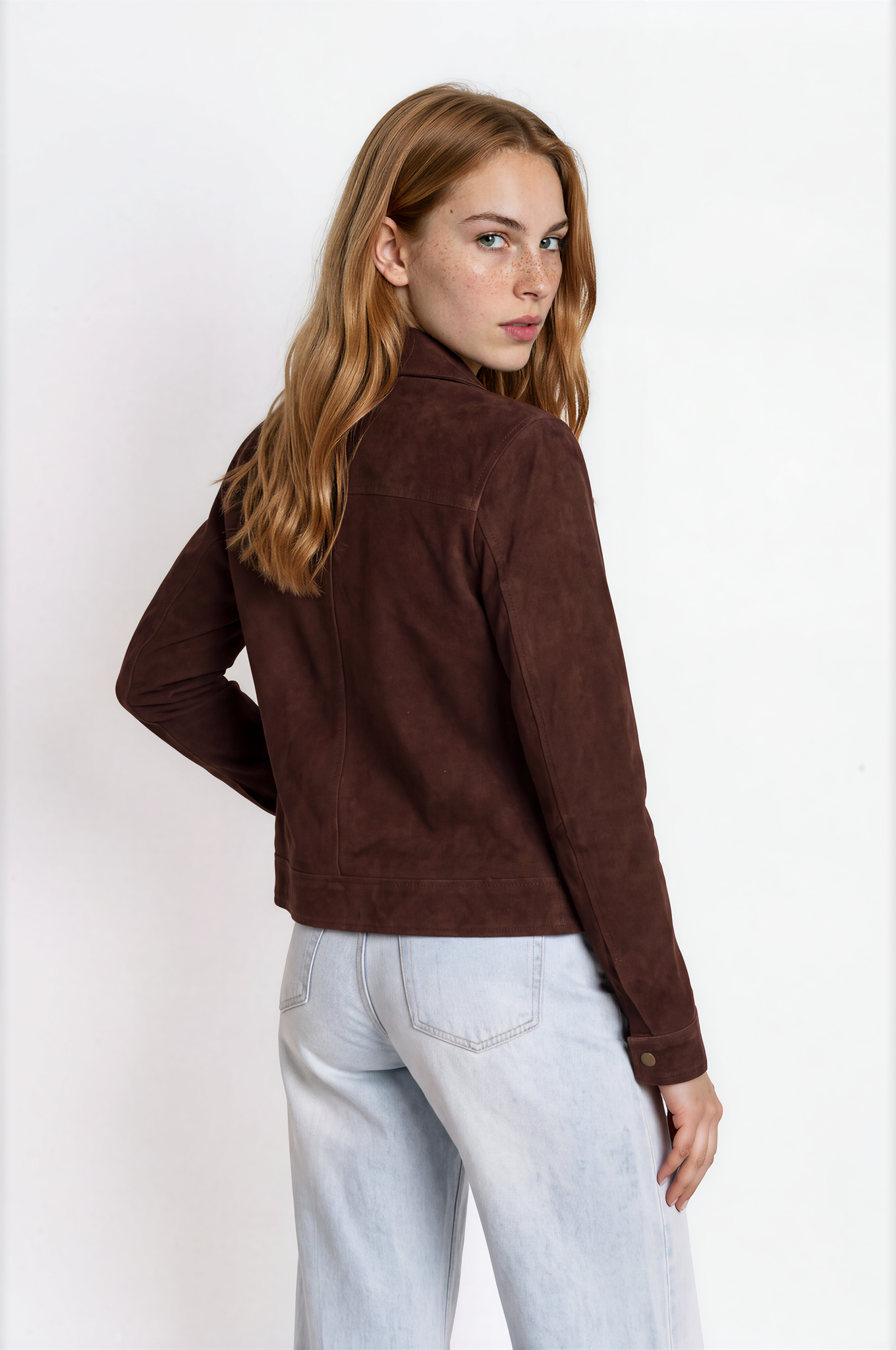
- Trucker: structured and slightly boxy with a cropped body. Shoulders clean, body straight, with enough ease to layer a shirt underneath without pulling at the buttons.
When Off-the-Rack Isn’t Enough
Standard sizes assume standard proportions — and very few of us actually have them. If you are consistently between sizes, have very long arms, carry broad shoulders on a slim waist, or simply want a jacket that fits like it was cut for your body alone, Made to Measure is the answer. Every panel is cut to your numbers, every one of the five fit points is dialed in by design, and you choose the leather, lining and details too.
The Bottom Line
The right leather jacket fit is snug but never tight: shoulder seams at the edge of your shoulders, a chest you can slip a flat hand into, sleeves ending at the wrist bone, the right length for the style, and free movement in every direction. Measure carefully using our buying guide and size guide, then browse the men’s collection and women’s collection to find your style. And when off-the-rack can’t deliver all five points, made-to-measure will.
Should a leather jacket fit tight or loose?
Snug, not tight. A leather jacket should sit close to the body with enough room to move freely. New leather eases and molds to your shape within weeks, so a jacket that feels perfect on day one often ends up too loose — buy for a slightly snug fit, never a strained one.
Where should the shoulder seams sit on a leather jacket?
Right at the edge of your natural shoulders. Seams drooping onto your upper arms mean the jacket is too big; seams pulling inside the shoulder line mean it is too small. Shoulders are the hardest part to alter, so treat this as the deal-breaker.
How long should a leather jacket be?
Biker and bomber styles should end at the waist; aviator and shearling styles sit a little lower, around the hip. A jacket that covers your seat shortens the leg line and bunches when you sit, unless it is a long coat designed that way.
How long should leather jacket sleeves be?
Sleeves should end at your wrist bone with your arms relaxed, just covering the cuffs of the shirt underneath. Check with your arms slightly bent — the cuffs should still cover your wrists. New sleeves can feel long at first because the leather sits stiff.
Should I size up to wear a sweater under my leather jacket?
Only for genuinely heavy layers such as thick knits or hoodies. For t-shirts and light shirts, buy your measured size — leather molds to your body, and sizing up unnecessarily leaves a sloppy fit most of the year.
What should I do if I am between sizes?
Compare your chest, shoulder and sleeve measurements against the size guide and choose by the measurement that matters most — usually the shoulders. If no standard size fits cleanly, made-to-measure builds the jacket to your exact numbers.
Do leather jackets run small?
Compared with the same size in a sweatshirt or a wool coat, usually yes. Leather jackets are cut closer to the body, and leather has very little give in the chest and shoulders, so a man or woman who wears a medium everywhere else will often need a large in leather — especially with a layer underneath. That is why the size on the tag matters less than your measurements against the size guide.
What is the most important measurement for a leather jacket?
Your shoulders. Chest ease can vary, sleeves can sometimes be shortened, and length is forgiving on most styles — but shoulder seams in the wrong place cannot be fixed by any tailor. Measure shoulder to shoulder across your back and choose the size that gets that number right; the rest of the fit follows from it.
[…] And if the real problem is that your jacket never fit quite right in the first place, check our leather jacket fit guide — or consider a made-to-measure jacket built to your exact measurements, which drapes better and […]