
Can You Wear a Leather Jacket in the Rain?

Yes — you can wear a leather jacket in the rain. Light rain is genuinely fine on a well-kept smooth leather jacket, as long as you dry it properly afterward. It’s the soaking that damages leather, not the sprinkling.
Keep one fact front and center: leather is water-resistant at best, never waterproof. Below is exactly what rain does to leather, how to protect your jacket before you head out, and how to dry it the right way if it gets caught in a shower.

Waterproof vs. Water-Resistant: What the Words Mean for a Jacket
Waterproof means water cannot get through — and that is never true of a leather jacket. Seams, stitching holes, zippers, and the breathable hide itself all give moisture a way in eventually. No leather jacket, however well made, is a raincoat.
Water-resistant means the surface slows water down. Smooth, finished leather does this naturally: droplets bead up and roll off before they can soak in. That’s why a drizzle barely registers on a healthy jacket.
Protector sprays and waxes add resistance — they don’t convert your jacket into rain gear. Think of them as buying you time in a shower, not immunity in a storm.
How Different Leathers Handle Rain
Not every leather faces rain equally. The denser and more finished the hide, the better it shrugs off water:
| Leather type | Rain rating | Why |
|---|---|---|
| Full-grain | Best | Dense, intact grain repels light rain — it’s what Alaskan Polar jackets are made from. |
| Top-grain | Good | Sanded and finished surface beads water well, though slightly less dense than full-grain. |
| Genuine leather (split) | Fair | Looser fibers absorb water faster and can dry stiff if soaked repeatedly. |
| Suede / nubuck | Poor | Open nap soaks up water instantly and stains — never wear it in rain. |
| Faux leather | Good (surface only) | Plastic coating sheds water, but seams and lining can still trap moisture. |
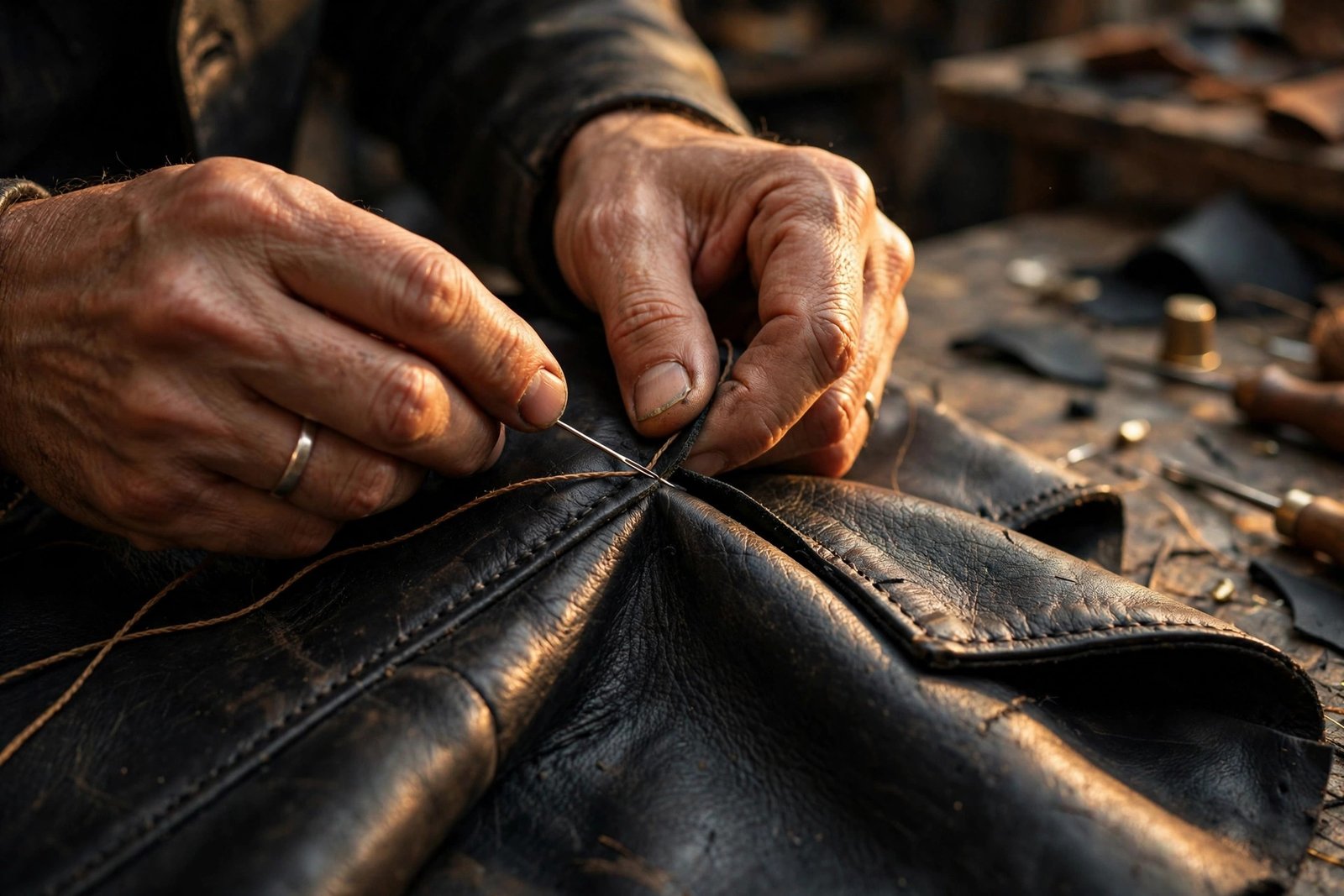
Wondering where your jacket falls on this scale? Our leather types guide breaks down every hide — from full-grain to genuine — so you know exactly what you’re wearing.
What Rain Actually Does to Leather
Rainwater itself isn’t poison. The real problems come from how water moves through the hide — and how the jacket dries:
- Water spots: minerals in rainwater leave pale rings as droplets dry unevenly.
- Stiffness: soaked fibers dry rigid when the jacket isn’t reconditioned afterward.
- Color darkening: wet leather looks darker; usually temporary, but repeated soakings can permanently shift the tone.
- Shape distortion: a saturated jacket hangs heavy and can stretch or sag out of shape.
- Mildew: a jacket put away damp is a mildew invitation — musty odor included.
Already dealing with a musty jacket? Our smell removal guide walks you through fixing it, step by step.
Before You Go Out: 3 Steps of Rain Prep
- Keep it conditioned. Conditioned leather repels water far better than dry, thirsty leather. See our care guide for the right products and technique.
- Add a protector spray or wax. A silicone-free protector spray or beeswax-based balm adds a hydrophobic layer — always test it on a hidden spot first.
- Know your jacket’s limits. A conditioned full-grain jacket in a drizzle? Fine. A suede trucker in a downpour? Leave it home.
Caught in the Rain: What to Do Right Then
- Get under cover as soon as you reasonably can.
- Shake off standing water.
- Blot — don’t rub — with a soft, dry cloth.
- Empty the pockets so wet contents don’t stretch or stain the lining.
- Don’t put it away wet; hang it up the moment you’re indoors.
How to Dry a Wet Leather Jacket Properly
- Hang it on a wide, sturdy hanger so the shoulders keep their shape as it dries.
- Let it air-dry at room temperature in a ventilated room — away from direct heat of any kind.
- Be patient: a damp jacket can take a full day or two to dry all the way through.
- Once fully dry, condition it to restore the oils the water displaced — our break-in guide covers conditioning technique too.
- Buff gently with a soft cloth to even out the finish.
What NOT to Do — Ever
- No radiators, hairdryers, or direct heat — heat cooks the fibers and leaves leather brittle and cracked.
- No strong sunlight — it fades and dries the finish unevenly.
- No ironing while damp.
- No plastic garment bags or sealed storage while damp — trapped moisture breeds mildew.
- Don’t wear it while it’s still damp — flexing wet leather stretches it out of shape.
When to Leave the Leather at Home
- Heavy rain in the forecast — not a drizzle, a deluge.
- All-day exposure with no chance to dry out — festivals, long hikes, open-air events.
- Suede or nubuck — these never go out in rain, full stop.
A Note on Alaskan Polar Jackets
Every Alaskan Polar jacket is cut from full-grain leather and hand-finished — the most rain-tolerant leather there is. With basic care, a drizzle is genuinely nothing to worry about.
Browse the men’s collection and women’s collection, or go made-to-measure for a jacket built exactly for you.
Related Guides
- Leather Jacket Care Guide
- Leather Types Guide: Full-Grain vs Top-Grain vs Genuine
- How to Break In a Leather Jacket
- How to Get Smell Out of a Leather Jacket
- Leather Jacket Size Guide
Can you wear a leather jacket in the rain?
Yes, in light rain. A well-kept smooth leather jacket handles a drizzle with no trouble — just blot off the water and let it air-dry at room temperature afterward. Avoid heavy or prolonged rain, which can soak through seams and damage the hide.
Are leather jackets waterproof?
No. Leather is water-resistant at best, never waterproof. Seams, stitching, and zippers let water through, and the breathable hide itself is no barrier. Protector sprays and waxes add resistance but don’t waterproof a jacket.
What should I do if my leather jacket gets wet in the rain?
Shake off standing water, blot (don’t rub) with a soft dry cloth, and hang the jacket on a wide hanger at room temperature in a ventilated room until fully dry. Once dry, condition it to restore lost oils. Never use direct heat to speed things up.
Can I wear a suede leather jacket in the rain?
No. Suede and nubuck have an open nap that absorbs water instantly, leaving stains and stiff patches. Keep suede and nubuck jackets out of the rain entirely.
Will rain ruin a full-grain leather jacket?
Light rain won’t harm a well-kept full-grain jacket — it’s the densest, most water-tolerant leather. Damage comes from soaking, repeated wetting without proper drying, or drying with heat.
How do I protect my leather jacket before rainy season?
Condition it first, then optionally apply a silicone-free protector spray or wax (test on a hidden spot). Check the forecast before heading out, and know your jacket’s limits — save suede for dry days.