How to Choose the Perfect Leather Jacket: The Complete Buying Guide

A leather jacket is not a seasonal purchase. It is a decades-long companion — the piece you reach for every winter, the one that looks better at year ten than it did on day one. But only if you choose well.
This guide walks you through everything that matters: leather grades, styles, fit, and the small details that separate a jacket you keep from a jacket you replace. Read it once, buy once.
1. Start With the Leather: Know Your Grades
Not all leather is equal, and the grade determines how your jacket ages.
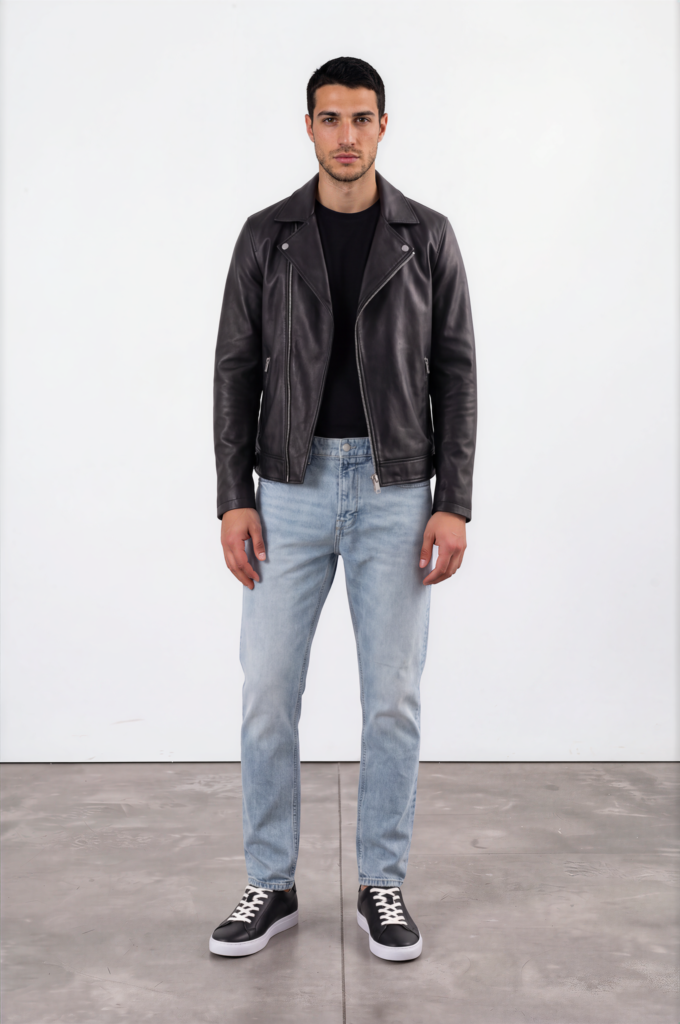
Full-grain leather is the top layer of the hide — the strongest, most durable cut. It develops a rich patina over time instead of wearing out. This is what premium jackets are made from, and it is what we use at Alaskan Polar.
Top-grain leather is sanded and refinished for a softer, more uniform feel. Still excellent, slightly less rugged than full-grain.
‘Genuine leather’ sounds reassuring, but it is actually a marketing term for the lower grades of the hide. It costs less because it lasts less. When a price looks too good to be true, check the grade — that is usually why.
Rule of thumb: always ask what grade the leather is before you buy. If the seller cannot answer, walk away.
2. Pick a Style That Suits Your Life
The best leather jacket is the one you will actually wear every day.
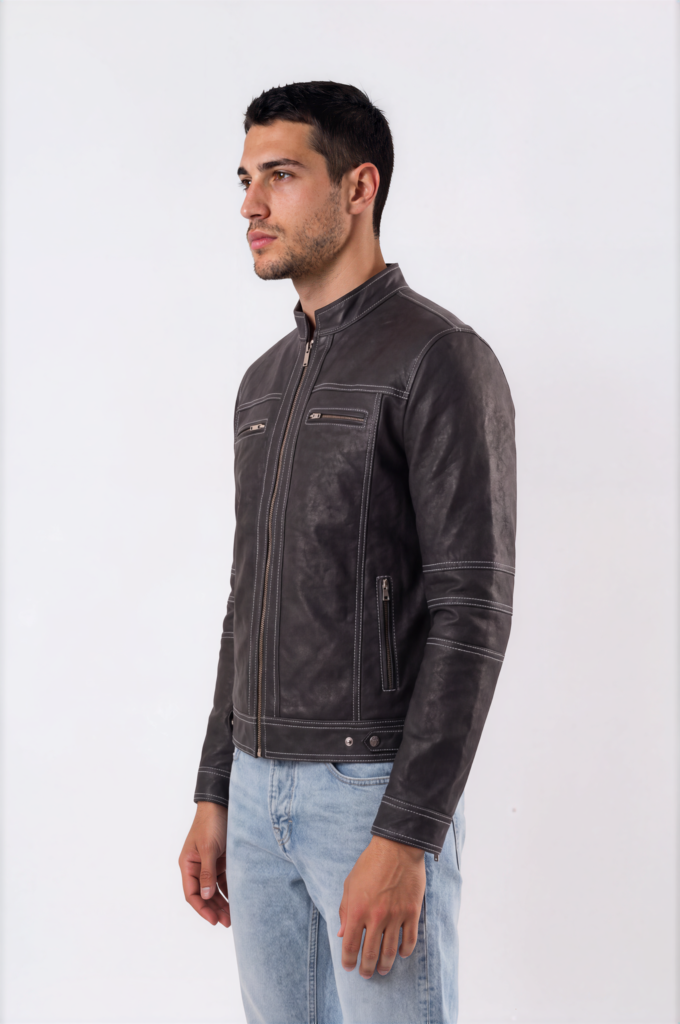
The biker (moto) jacket, with its asymmetric zip and sharp lapels, carries attitude — perfect if your wardrobe leans bold.
The bomber is clean and versatile, working as easily with jeans as with smarter outfits.
The café racer is minimal and sleek, with a stand collar and straight zip — a quiet classic.
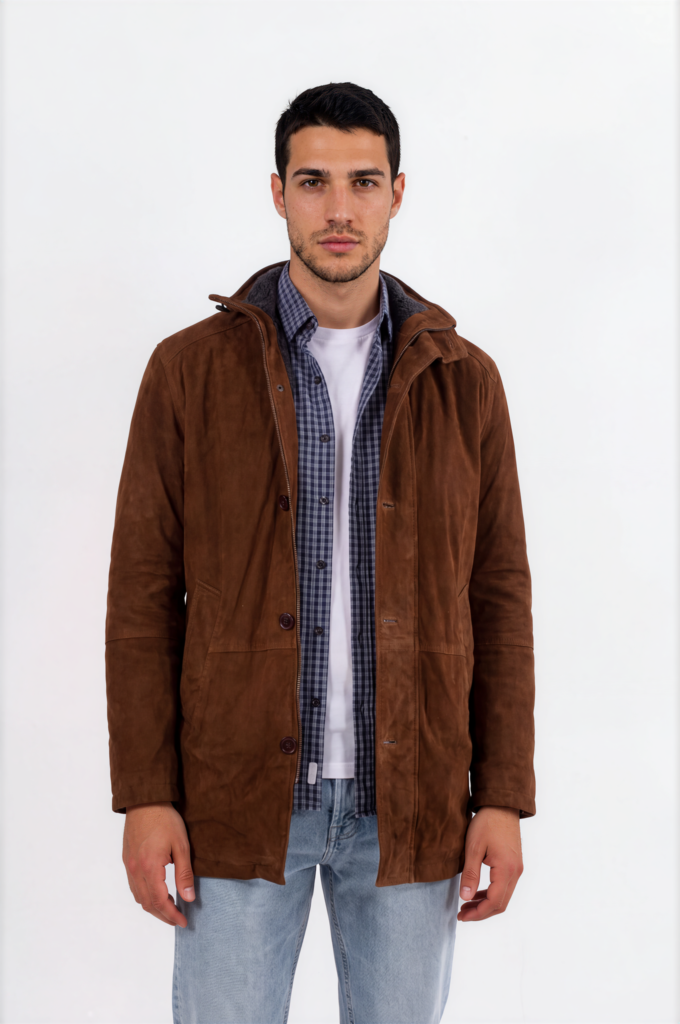
The shirt jacket (or trucker style) layers like a shirt but protects like a jacket, ideal for milder days.
Choose the style that matches how you already dress, not the one you wish you dressed in. A jacket that fights your wardrobe stays in the closet.
3. Get the Fit Right
Fit is where most buyers go wrong. A leather jacket should fit closer than a winter coat — leather relaxes and molds to you with wear.
Shoulders: the seam should sit right at the edge of your shoulder, not beyond it.
Sleeves: they should end at your wrist bone. Slightly long is fine; they settle with wear.
Body: you should be able to zip it comfortably over a sweater, but it should not billow when zipped over just a t-shirt.
Between sizes? Size down for a sharper look, up for layering room. And check our size guide before ordering — five minutes with a tape measure saves a return.
4. Inspect the Details
Before you buy, inspect four things: the zippers, the lining, the stitching, and the hardware — their quality decides how long your jacket will actually last.
The difference between a good jacket and a great one hides in the details.
Zippers should glide smoothly and feel heavy — sturdy metal hardware outlasts the jacket itself.
Lining matters more than most buyers realize. A quilted or insulated lining turns a style piece into genuine winter armor.
Stitching should be even, straight, and reinforced at stress points like pockets and underarms.
Snaps, buttons, and buckles should feel solid, not hollow. Cheap hardware is the first thing to fail.
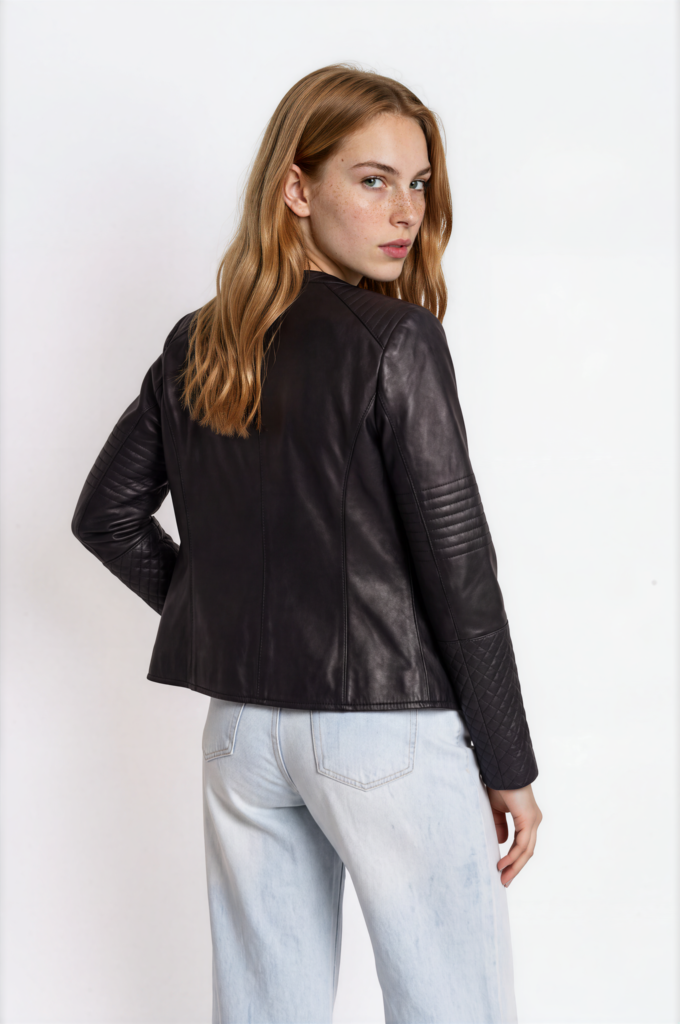
5. Think Long-Term: Care Is Simple
A quality leather jacket asks very little of you. Keep it dry, let it air out after wear, hang it on a wide hanger so the shoulders keep their shape, and condition the leather once or twice a year. That is it. Do this and a full-grain jacket will outlive trends, and probably outlive your next three winter coats.
What leather grade is best for a jacket?
Full-grain leather is the best choice — it is the top layer of the hide, the strongest and most durable cut, and it develops a rich patina over time instead of wearing out. Top-grain is a good second choice: sanded and refinished for a softer, more uniform feel. ‘Genuine leather’ is a marketing term for lower grades of the hide.
Which leather jacket style should I choose?
Choose the style that matches how you already dress. The biker (moto) jacket carries attitude with its asymmetric zip and sharp lapels; the bomber is clean and versatile; the café racer is a minimal, sleek classic; and the shirt or trucker jacket layers like a shirt for milder weather.
How should a leather jacket fit?
It should fit closer than a winter coat. The shoulder seam should sit right at the edge of your shoulder, sleeves should end at your wrist bone, and you should be able to zip it comfortably over a sweater without it billowing when zipped. Between sizes? Size down for a sharper look, or up for layering room.
What details should I check before buying a leather jacket?
Check the zippers — they should glide smoothly and feel heavy; the lining, which matters more than most buyers realize (quilted or insulated turns a style piece into a winter-ready one); the stitching, which should be even, straight, and reinforced at stress points like pockets and underarms; and the hardware — snaps, buttons, and buckles should feel solid, not hollow, since cheap hardware is the first thing to fail.
How do I care for a leather jacket?
Keep it dry, let it air out after wear, hang it on a wide hanger so the shoulders keep their shape, and condition the leather once or twice a year. Do this and a full-grain jacket will outlive trends — and your next three winter coats.
Is a leather jacket worth the investment?
Yes. A leather jacket is not a seasonal purchase but a decades-long companion. A well-made full-grain jacket outlives trends and your next three winter coats, so buying quality once beats replacing cheap jackets again and again.
Related guides: Leather types guide: full-grain vs top-grain vs genuine leather · Leather jacket styles guide: biker vs bomber vs racer vs trucker · Leather jacket care guide: cleaning and conditioning
The Alaskan Polar Standard
Every Alaskan Polar jacket starts with premium full-grain leather, is hand-finished by craftsmen, and is built for real cold — not just for the look of it. When you buy from us, the grade, the stitching, and the hardware are already decided in your favor. All that is left is choosing your style.
Ready to find yours? Browse the men’s collection and the women’s collection — and if you are between sizes, our size guide will sort you out in minutes.
[…] This guide covers everything you need to keep your leather jacket looking its best for decades: cleaning, conditioning, protecting, and storing. If you haven’t bought yours yet, start with our guide on choosing the right leather jacket. […]
[…] Walk into the world of leather jackets and you’ll meet four names over and over again: biker, bomber, racer, and trucker. They look different, fit differently, and suit different people — but the differences are often glossed over with vague fashion advice. This guide fixes that. If you’re still deciding between them, start with our guide on choosing the right leather jacket. […]
[…] Two leather jackets can look identical on a hanger and differ by hundreds of dollars. The reason is almost always the leather grade. “Genuine leather” sounds premium — it isn’t necessarily. “Full-grain” sounds like marketing — it’s actually the best you can buy. This guide cuts through the labeling so you know exactly what you’re paying for. If you haven’t picked a style yet, start with our buying guide. […]
[…] will save you a return. (Shopping for someone else, or want the unisex perspective? Our guide on how to choose a leather jacket covers the fundamentals for every […]
[…] you choose — from this list or anywhere else — keep these non-negotiables in mind (our guide on how to choose a leather jacket goes […]
[…] the right length for the style, and free movement in every direction. Measure carefully using our buying guide and size guide, then browse the men’s collection and women’s collection to find your […]